

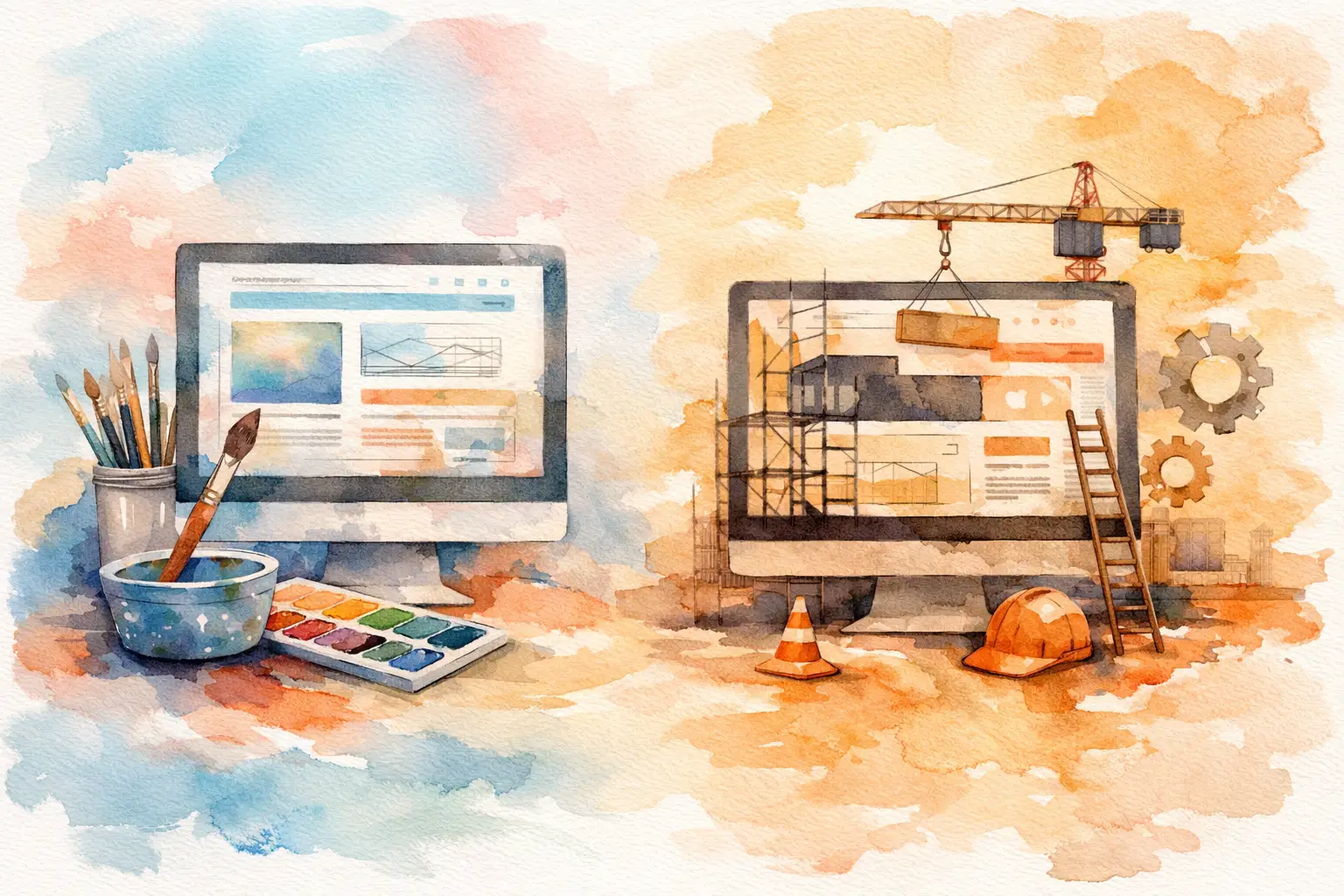

A site that looks tired is one thing. A site that costs you enquiries is another. When business owners start weighing up website redesign vs rebuild, the real question is not just how the site looks – it is whether the current platform can still support growth, rankings and lead generation.
That distinction matters. Many SMEs put off website work because they assume every change means starting from scratch. Others spend money on a visual refresh, only to find the same problems still sitting underneath: slow load times, poor mobile performance, awkward editing, weak page structure and low conversion rates. If the foundation is wrong, a fresh coat of paint will not fix it.
Website redesign vs rebuild: what is the difference?
A redesign keeps the existing website framework and improves what users see and interact with. That usually means updating the layout, colours, navigation, calls to action, imagery and page structure. In some cases, content is improved too, but the underlying platform and technical setup stay broadly the same.
A rebuild is more substantial. It means creating the website again, often on a better platform or with a cleaner technical setup. The code, templates, page architecture, speed optimisation, mobile responsiveness and content structure may all be reworked. A rebuild can also involve migrating to a new content management system if the current one is limiting the site.
For a business owner, the practical difference comes down to risk, cost and return. A redesign is usually faster and cheaper in the short term. A rebuild often costs more upfront, but it can remove long-standing issues that are holding the site back.
When a redesign is the right move
If your website basically works but feels dated, a redesign may be the sensible option. This tends to suit businesses with a site that already loads reasonably well, has an acceptable technical setup and is easy enough to update, but no longer reflects the quality of the business.
You might be in this position if your branding has moved on, your service pages look cluttered, or your enquiry journey feels disjointed. In those cases, improving design and messaging can make a measurable difference without the time and cost of rebuilding everything.
A redesign can also work well when rankings are already stable. If your core pages perform in search and the structure is sound, preserving what works while improving the user experience is often the safer route. This is especially true for local businesses that rely on existing visibility and do not want unnecessary disruption.
That said, a redesign only makes sense if the current site is genuinely worth keeping. If your developer has to work around years of patches, plugin conflicts or outdated templates, the savings can disappear quickly.
When a rebuild makes more sense
Sometimes the website is not just old. It is working against you. That is where a rebuild becomes the better investment.
If your site is slow, difficult to manage, not properly mobile-friendly or built on a platform that limits SEO and conversion improvements, rebuilding is often the cleaner answer. The same applies if your site has been edited by several people over the years and has become bloated, inconsistent or technically messy.
A rebuild is also worth considering if your business has changed. Perhaps you started with a simple brochure site and now need location pages, service-led landing pages, better tracking, stronger calls to action or integration with paid campaigns. Trying to force those requirements into an outdated structure usually leads to more compromise.
For many local and regional businesses, a rebuild is the point where the website stops being an online leaflet and starts becoming a proper lead generation tool. Better page speed, clearer conversion paths, stronger on-page SEO and a more logical structure all support visibility and enquiries.
The hidden costs behind the wrong choice
The biggest mistake is choosing based on upfront price alone. A redesign can look cheaper, but if it leaves major technical issues untouched, you may end up paying twice.
For example, if your site still suffers from poor mobile usability, thin service page structure or a clumsy content management system, the team working on it can only improve so much. You spend money on a nicer-looking site, but rankings stay flat and enquiries do not improve enough to justify the project.
On the other hand, a rebuild is not automatically the smarter option either. If your current website already has a sound technical base and good SEO performance, rebuilding unnecessarily can create avoidable risk. Poor migration planning can damage rankings, confuse returning users and delay campaigns.
That is why the decision should be based on evidence. How is the site performing now? What is broken? What is limiting growth? Which problems are visual, and which are structural?
What to assess before deciding
A proper decision starts with an honest review of the current site. Design is only one part of it.
Performance should come first. If the site is slow, unstable or awkward on mobile, that affects both users and search visibility. Content is next. Many websites fail not because they are ugly, but because they do not explain services clearly or guide visitors towards action.
Then there is SEO structure. Are pages targeting the right services and locations? Is the navigation logical? Are title tags, headings and internal page relationships helping the site rank, or making things harder?
Finally, look at usability on the business side. Can your team update pages easily? Can new services be added without a developer rebuilding half the site? If every small change becomes a hassle, the platform itself may be part of the problem.
Website redesign vs rebuild for SEO and lead generation
For most SMEs, the website is not there to win design awards. It needs to generate calls, form fills and quote requests. That is why website redesign vs rebuild should be judged against business outcomes, not personal taste.
A redesign can improve conversion rates when your traffic is already there but the user journey is weak. Better calls to action, cleaner page layouts and stronger trust signals can help more visitors turn into enquiries.
A rebuild can go further when search performance and usability are both under pressure. It gives more room to improve technical SEO, page templates, local landing pages, schema, page speed and tracking. If your website needs to support SEO, Google Ads and local search visibility together, the structure underneath matters a lot.
This is often where smaller businesses benefit from expert guidance. It is easy to focus on what looks old, but the commercial value is usually tied to what converts poorly, loads slowly or cannot rank effectively.
How to make the right call for your business
If your site still performs well technically and only needs a sharper presentation, a redesign may be enough. If the site feels outdated because the business has evolved, but the back end is stable, refreshing the user experience can be a smart move.
If the site is difficult to update, underperforms in search, struggles on mobile or has obvious structural weaknesses, a rebuild is usually the stronger long-term option. It gives you the chance to fix the root issues rather than working around them.
There is also a middle ground. Some businesses need what looks like a redesign on the surface, but with selective rebuilding of key templates, service pages or technical elements underneath. That can offer better value than choosing one extreme or the other.
The right answer depends on where the current website is falling short and what you need it to do next. A local trades firm looking for more quote requests may need something very different from a multi-location service company trying to improve visibility across several towns.
A good agency should be able to tell you plainly whether your site is worth improving or whether it is time to replace the structure altogether. That advice should be based on performance, not on pushing the bigger project.
If you are unsure, the best next step is a proper review of the site you have now. One honest assessment can save a lot of wasted budget and help you choose the option that actually moves the business forward. If you want a straightforward opinion, Thistle Media Group can help you assess where your current site stands and what will deliver the best return.