

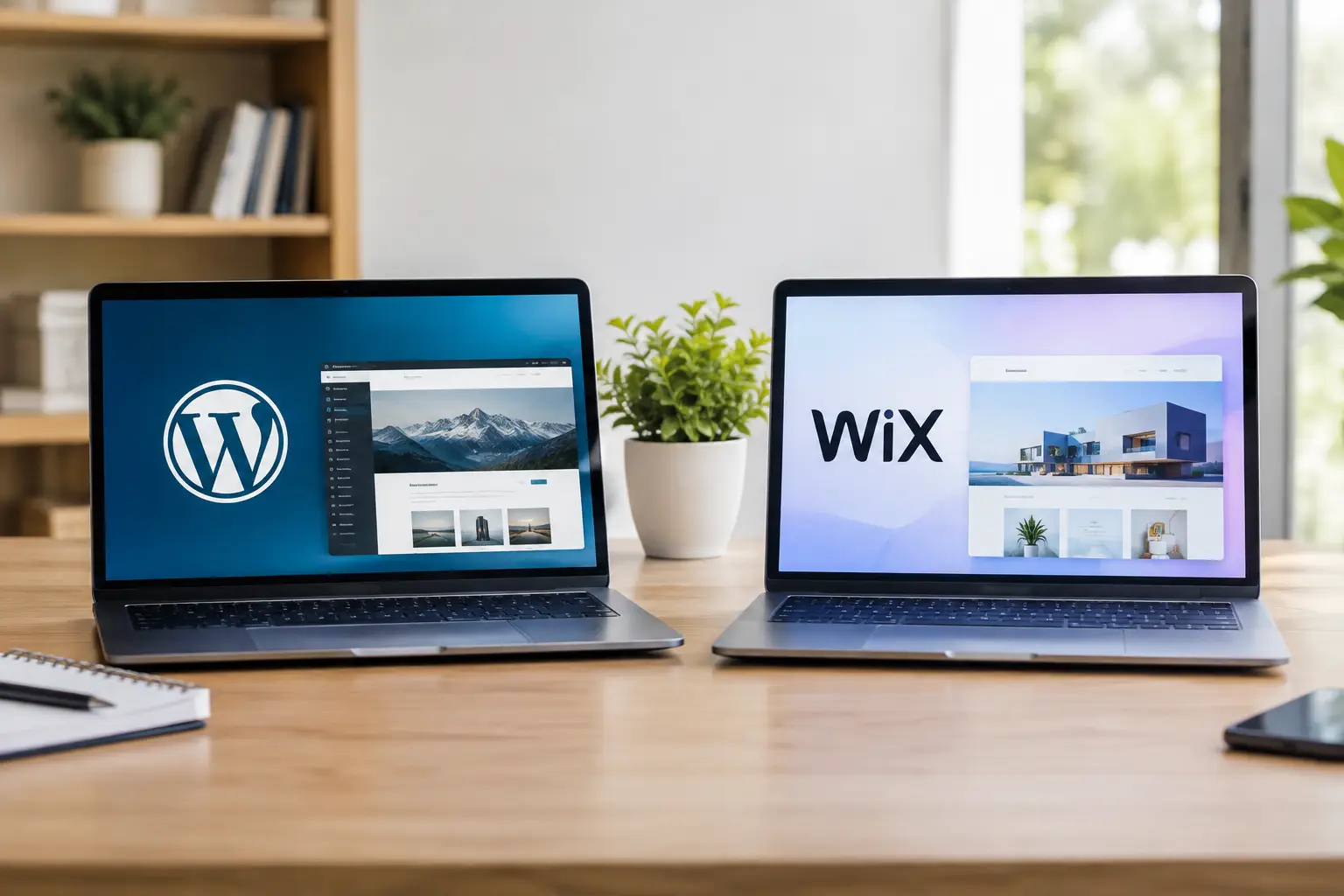

A website that looks fine but fails to generate calls, quote requests or bookings is not doing its job. When comparing WordPress versus Wix websites, the right choice is less about which platform is ‘best’ and more about what your business needs the site to achieve over the next few years.
For a local tradesperson, professional service, growing retailer or multi-location business, the decision affects how easily you can appear on Google, update your services, add locations and turn visits into enquiries. Both platforms can produce attractive sites. The difference is in the control, flexibility and ongoing support available once your business starts to grow.
WordPress versus Wix websites: the key difference
Wix is an all-in-one website builder. Hosting, templates, editing tools and many basic features sit in one dashboard. It is designed to get a simple website online quickly, often without needing technical knowledge.
WordPress is a content management system with far more flexibility. It can be built around your business rather than around the limitations of a template. With the right hosting, design and ongoing management, it can support everything from a straightforward brochure site to a large service website with location pages, booking tools, ecommerce and lead tracking.
That distinction matters. Wix usually offers convenience first. WordPress offers ownership and scope to develop. Neither approach is automatically wrong, but they suit different stages of business.
When Wix can be the sensible choice
Wix can work well for a new business that needs a basic online presence quickly. If you have a small number of services, limited content, no complex integrations and the time to manage the site yourself, it can be a practical starting point.
Its visual editor is straightforward. You can choose a template, add your business details, upload photos and publish without arranging separate hosting or installing software. For a sole trader testing a new idea or a small local business needing a simple contact page, that convenience has real value.
The challenge comes when the site needs to do more than act as an online leaflet. A business that wants to target several towns, publish regular useful content, build service-specific landing pages, improve page speed or connect detailed reporting may find Wix more restrictive over time.
Wix subscription costs can also rise as you add features, ecommerce functionality or extra storage. The initial monthly price should not be the only figure you consider. Look at the cost of the plan you need now, the plan you may need next year, and the time spent managing changes yourself.
Why WordPress is often stronger for growth
A professionally built WordPress site gives your business more room to grow without needing to start again. It is particularly well suited to firms that depend on local search visibility, lead generation and a website that reflects their own way of working.
For example, a plumber covering Hamilton, East Kilbride and Glasgow may need individual pages for key services and service areas, clear enquiry forms, trust-building reviews and fast mobile performance. A WordPress site can be structured around those goals from the outset rather than squeezed into a pre-set layout.
Better control over SEO foundations
No platform guarantees first-page rankings. Strong search performance still depends on useful content, relevant service pages, technical setup, local signals, Google Business Profile optimisation and ongoing work. However, WordPress generally gives an experienced marketing team more control over those foundations.
You can build clear page structures, optimise titles and descriptions, manage redirects when pages change, compress images, improve loading times and add structured data where appropriate. These details are rarely exciting to a business owner, but they can influence whether your website is easy for Google to understand and easy for potential customers to use.
Wix has improved its SEO tools considerably and can support basic optimisation. For a small site with modest ambitions, that may be enough. For businesses competing in busy local markets, WordPress normally provides more options to refine the site as competition and requirements change.
A website built around conversions
Traffic only has value when it leads somewhere. Whether you want telephone calls, form completions, appointment bookings or ecommerce sales, WordPress allows greater freedom to shape the customer journey.
That could mean placing different calls to action on different service pages, creating dedicated Google Ads landing pages, tracking form submissions, connecting a CRM system or testing which page content generates more enquiries. These are useful capabilities when you are investing in SEO or paid advertising and need to know what is producing a return.
Wix has built-in tools for forms and bookings, and they can be perfectly adequate for straightforward requirements. WordPress becomes the stronger option when your website needs to work as part of a wider marketing system rather than as a standalone brochure.
Design flexibility without looking generic
A template-based Wix site can look polished, but there is a risk of ending up with a design that resembles many other local businesses. WordPress can also use templates, yet a skilled designer can tailor the layout, content hierarchy, colours, imagery and page flow to your brand and customers.
This is not about adding unnecessary effects. It is about making the important information obvious: what you do, where you work, why customers should trust you and how they can get in touch. Clear design often converts better than a site packed with movement and decoration.
The trade-offs you should consider
WordPress is not a magic answer, and it does require proper management. The platform, theme and plugins need updates. Security needs attention. Backups should be in place. If several untested plugins are added over time, they can create compatibility or speed problems.
That is why a managed WordPress service is often the better route for busy business owners. You retain a flexible, high-performing website while a specialist handles the technical maintenance, updates and support. It removes the burden of trying to troubleshoot an issue when you should be serving customers.
Wix reduces some of that maintenance because it manages much of the technical environment for you. The trade-off is reduced flexibility and a greater dependence on its built-in ecosystem. Moving away from Wix later can also involve rebuilding significant parts of your website rather than simply transferring it.
There is also no point paying for a complex WordPress build if your business only needs one page, a phone number and a contact form. The platform should match the commercial need, not an agency’s preferred package.
Cost: look beyond the monthly fee
Wix often appears cheaper because the entry cost is clear and low. For a simple self-managed website, it may well be cheaper in the short term. But a site that does not rank, convert or reflect your business properly can be expensive in a different way.
With WordPress, costs may include hosting, design, development, maintenance and premium tools. That can make the upfront figure higher. In return, you can have a site designed to support lead generation, local SEO campaigns, paid traffic and future expansion.
The useful question is not, “Which platform costs less this month?” Ask, “Which website is most likely to support the enquiries and visibility we need?” For many established SMEs, the answer is a well-managed WordPress site. For a very small or temporary project, Wix may be enough.
How to make the right decision for your business
Start with what the website must achieve. If you want a clean, simple online presence and expect little change, Wix can be a sensible, manageable option. If your website needs to rank locally, support ongoing marketing, cover multiple services or locations, and generate measurable leads, WordPress is usually the better long-term investment.
Before committing, ask who will update the site, how leads will be tracked, what happens if you change provider, and whether the platform can support your plans in two or three years. Those answers matter far more than a drag-and-drop editor or a tempting introductory price.
A good website should make your business easier to find, easier to trust and easier to contact. If you are unsure which route fits your goals, a friendly consultation with Thistle Media Group can help you choose a practical option that supports growth rather than creating another job to manage.