


A lot of business owners ask the same question after their website goes live: should we invest in SEO or put money into Google Ads and get enquiries coming in straight away? When people compare seo vs google ads, they are usually not looking for theory. They want to know what will bring calls, quote requests and booked jobs without wasting budget.
The honest answer is that both can work very well, but they do different jobs. If you treat them as interchangeable, you can spend too much, wait too long, or back the wrong channel for your stage of growth. The right choice depends on your timescale, your market, your website, and how competitive your area is.
SEO vs Google Ads: the core difference
SEO helps your website appear in the organic search results. You do not pay for each click, but you do invest in the work required to earn visibility. That usually means technical improvements, page optimisation, local SEO, content, Google Business Profile work and authority building over time.
Google Ads puts your business at the top of the search results through paid placements. You bid on search terms, pay when someone clicks, and can start generating traffic quickly if the campaign is set up properly.
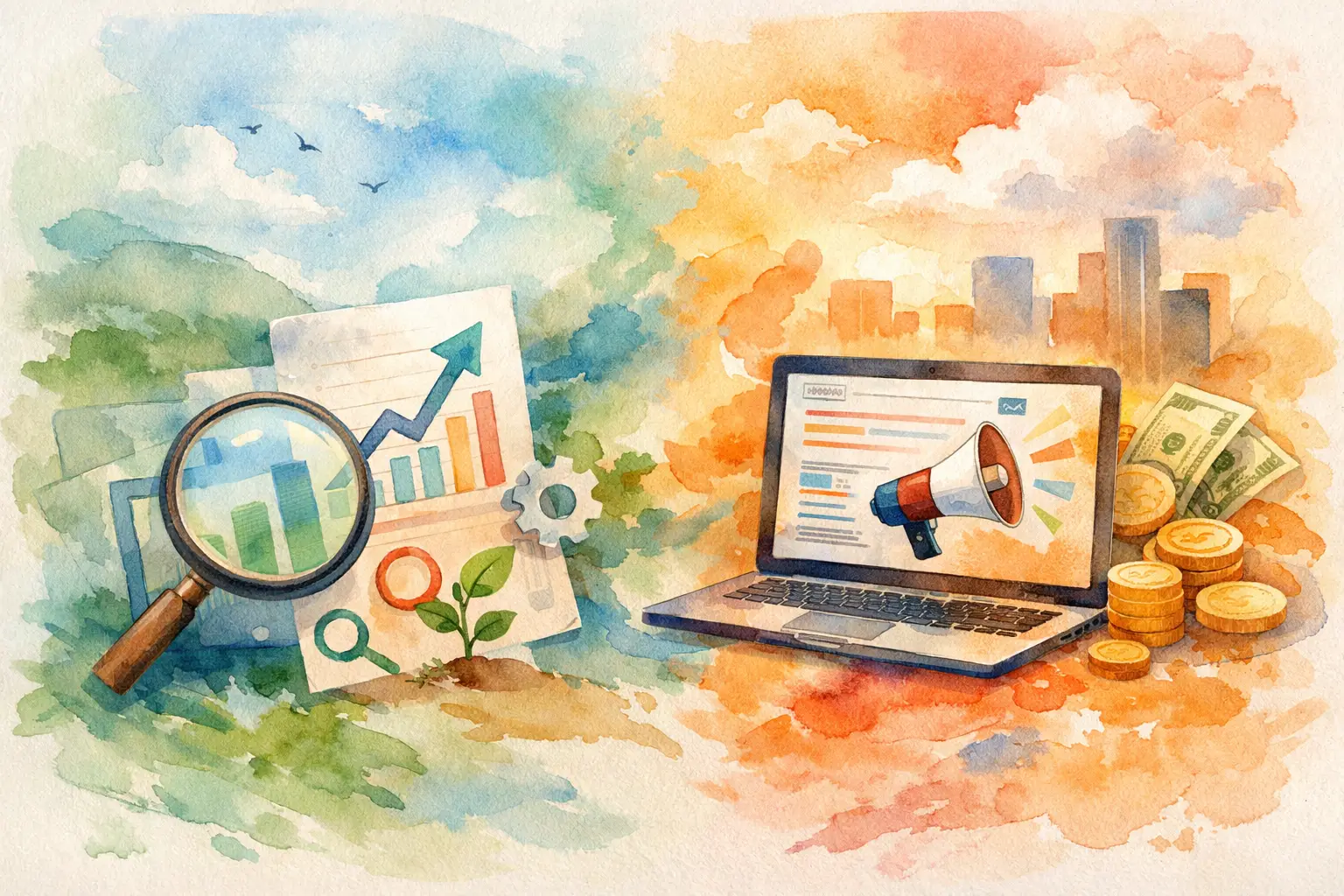
That difference matters because one channel is rented visibility and the other is built visibility. Ads can switch on quickly, but they stop when the budget stops. SEO takes longer, but strong rankings can keep producing enquiries month after month.
When SEO is the better investment
SEO is often the better route when you want steady lead generation and stronger long-term return. For local service businesses, this can be especially valuable. If someone searches for a plumber, joiner, solicitor or dentist in their area, showing up naturally in Google and on Maps builds trust before they even click.
There is also a compounding effect. A well-optimised website can rank for dozens or even hundreds of relevant searches, not just one or two headline phrases. Over time, that broad visibility can reduce your reliance on paid traffic and make each enquiry more cost-effective.
SEO also tends to support credibility. Many users skip adverts and head straight to the organic results because they see them as more established. That does not mean adverts do not work – they do – but organic visibility often carries a different kind of trust.
For businesses in competitive local areas such as Glasgow and the surrounding towns, local SEO can be one of the strongest assets you build. If your website, Google Business Profile and reviews are all working together, you can win visibility in places where buying every click through ads would become expensive very quickly.
The trade-off is patience. SEO is not usually the answer if you need leads this week. It can take months to gain traction, especially if your website is new, your area is competitive, or your current site has technical issues holding it back.
When Google Ads makes more sense
Google Ads is often the better option when speed matters. If you have just launched a business, added a new service, opened in a new location or need to fill your pipeline quickly, paid search can put you in front of ready-to-buy customers almost immediately.
It is also useful when you want control. With Ads, you can target specific services, locations, times of day and search intent. You can test which messages get clicks, which landing pages convert, and which services generate the best return. That level of control is hard to match with SEO alone.
For example, if you are promoting emergency call-outs, same-day services or a high-margin offer, Google Ads can be a very direct route to demand. You can place budget behind the exact searches most likely to convert rather than waiting for rankings to improve naturally.
The downside is cost. In some sectors, click prices are high and poor campaign management can burn through budget quickly. Traffic alone means very little if the landing page is weak, the targeting is too broad, or the wrong search terms are triggering your ads. A badly managed account can create the impression that Google Ads does not work, when the real issue is setup and oversight.
SEO vs Google Ads for lead quality
Lead quality is where the conversation gets more interesting. Many businesses assume the better channel is simply the one that brings more traffic, but that is rarely the right measure. The real question is which channel brings the right enquiries at a sensible cost.
SEO often produces strong lead quality because people find you while actively researching and comparing providers. They may spend longer on the site, view more pages and arrive with a clearer sense of what you do. That can lead to better-informed enquiries.
Google Ads can also produce excellent leads, particularly for high-intent searches. Someone searching for a service with urgency or clear buying intent can convert very quickly from an advert. But because ads can cast a wider net, campaign quality matters a lot more. The wrong keywords can attract irrelevant clicks and poor-fit leads.
If your business has a longer sales cycle, SEO may support better-quality opportunities because users often return more than once before making contact. If your service solves an immediate problem, Ads may produce faster and equally valuable enquiries.
Cost, time and return
One of the biggest mistakes business owners make is comparing SEO and Google Ads as if they should be measured on the same timeline. They should not.
Google Ads is usually easier to measure in the short term. You can see clicks, conversions, cost per lead and search term data relatively quickly. That makes it attractive for businesses that want a fast read on performance.
SEO should be measured over a longer period. The early months often involve fixing issues, building relevance and improving site structure before rankings move in a meaningful way. Once results come through, though, the cost per lead can become far stronger than paid traffic.
That is why the better question is not just what costs less, but what delivers the best return over six to twelve months. If you only look at the first few weeks, Ads will often look more attractive. If you look at long-term visibility and cumulative lead volume, SEO can become the stronger investment.
The strongest option is often both
For many SMEs, seo vs google ads is not really an either-or decision. The strongest strategy is often to use both in the right order and for the right purpose.
Google Ads can generate immediate traffic while SEO is building momentum. SEO can then reduce pressure on ad spend by increasing your organic visibility over time. Ads can also fill gaps where SEO is still weak, support seasonal campaigns, and give you useful conversion data that informs your wider strategy.
There is another advantage in combining them. When a business appears in paid results, organic listings and local map results, it can dominate more of the page and look far more established. That increased presence often improves click-through rates across all channels.
This joined-up approach is especially useful for businesses that do not have time to juggle multiple suppliers. A managed strategy covering the website, search visibility and paid campaigns tends to produce better decisions because each part is working towards the same commercial goal.
How to choose the right channel for your business
If you need enquiries quickly, start with Google Ads. If you want to build an asset that keeps working over time, invest in SEO. If your budget allows, do both with a clear plan rather than spreading spend thinly.
A newer business with no rankings, no review profile and little visibility may benefit from Ads first while the SEO groundwork is being done. An established business with a decent website and some search presence may get more value by strengthening SEO and using Ads selectively.
It also depends on your market. In some sectors, ad costs are manageable and conversion rates are strong. In others, the paid market is expensive enough that improving local rankings gives a better return. The only sensible way to decide is to look at your service margins, your location, your competitors and the current state of your website.
A good agency should not push one channel simply because that is what they prefer to sell. They should look at what your business needs now, what it will need six months from now, and how to move you from short-term wins to long-term growth.
If you are weighing up your next step, keep it simple. Choose the route that matches your timescale, your budget and your sales goals, and make sure the website behind it is built to convert. Traffic is easy to buy. Consistent, profitable enquiries take a smarter plan. If you want help working out what that looks like for your business, a friendly conversation with the right team can save a lot of wasted spend.